
Earning College Credit Through Your Experiences
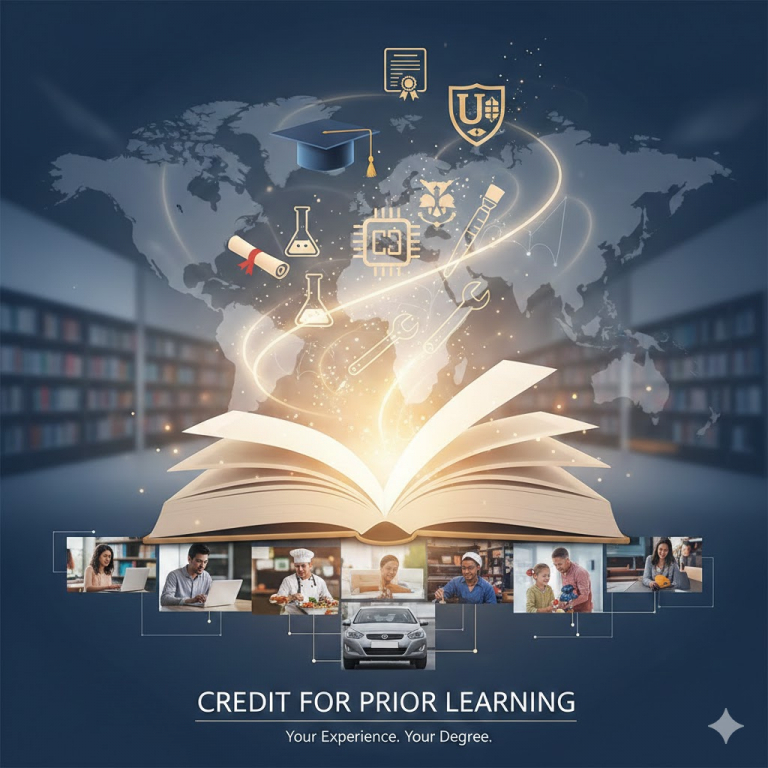
What is Credit for Prior Learning (CPL)?
CPL is a way to turn what you've learned from work and life into college credits. It's like getting a head start in college! CPL can come from:
- College Credits from other colleges
- Military service
- Workplace experiences and training
- Specialized training
- Knowledge assessments (tests) you have taken
- Certificates or other credentials
- Professional certificates (Degrees, certificates, or other credentials)
- Experiential (life) learning experiences
CPL is great because it saves you time and money. All the community colleges in Virginia accept CPL.
What Counts as College Credit?
1. College Credits From Other Colleges or Universities
Official Transcripts
Most colleges use third-party services like Parchment or the National Student Clearinghouse to handle official requests.
-
Identify the Service: Visit your college registrar’s website and search for "Transcript Request" to see which service they use.
-
Place the Order: You will need to provide your student ID or Social Security Number, the dates you attended, and the recipient's information.
-
Delivery: You can choose Electronic delivery (fastest, usually 24-48 hours) or Mail (takes 5-10 business days).
-
Cost: Fees typically range from $3.00 to $15.00 per copy.
2. Military Experience (skills, certificates, degrees). Thank you for your service.
If you have military experience, you will need your official Joint Services Transcript (JST) or Community College of the Air Force (CCAF) transcript to receive credit for:
- Military Training: Skills learned during active duty can be applied toward certificates or degrees.
- Standardized Tests: Results from military-specific exams used to validate knowledge can be officially recorded.
- Military Transcripts: If you are seeking credit for military experience, you must request your Joint Services Transcript (JST) or CCAF transcript.
3. Workplace Training (certificates and other learning/skill assessments)
Did you work for the Department of Corrections in Virginia?
In Virginia, incarcerated individuals have access to several types of work assignments, ranging from facility support to technical manufacturing through Virginia Correctional Enterprises (VCE). These jobs are intended to provide real-world experience, technical credentials, and a greater chance of post-release employment.
Virginia Correctional Enterprises (VCE) Jobs
VCE operates voluntary, industry-based programs where inmates must apply and interview for positions. These roles often provide specialized training in technical and manufacturing fields:
- Manufacturing & Assembly: Furniture design and building (office and dorm), metal fabrication, and garment production for facilities.
- Printing & Design: Graphic communications, digital print production, and the operation of offset presses and bindery equipment.
- Specialized Technology: Optical lens technology (foundational theory and frame repair) and refurbishing office ink and toner cartridges.
- Business Services: Document conversion, data management, and the use of Microsoft Office.
- Logistics: Shipping and receiving, auditing, and warehouse management.
Prison Support & Facility Operations
These "institutional" jobs are the most common and are necessary for the daily operation of the facility.
- Food Service: Cooking, meal preparation, and cleaning in the prison dining halls.
- Maintenance & Trades: General repairs, plumbing, painting, electrical work, and HVAC.
- Sanitation: Janitorial duties, laundry services, and custodial maintenance.
- Landscaping & Groundskeeping: Mowing, landscaping, and general clean-up of facility grounds.
- Agriculture: Field work, raising livestock, and maintaining farm equipment on units with agricultural operations.
Community Work & Release Programs
4. Professional Credentials
Core Skilled Trade Certifications
| Key Credentials & Certifications | |
| HVAC | EPA Section 608 (Required for refrigerants), NATE (North American Technician Excellence), HVAC Excellence. |
| Electrical | Journeyman or Master Electrician License, NEC (National Electrical Code) Certification. |
| Welding | AWS Certified Welder (American Welding Society), Semi-Automated Welding certificates. |
| Plumbing | Journeyman or Master Plumber License, Medical Gas Certification, Backflow Prevention Device Worker. |
| Automotive | ASE Certification (National Institute for Automotive Service Excellence) in Brakes, Engine Repair, or Electrical Systems. |
Specialized & Advanced Credentials
-
CDL (Commercial Driver's License): Required for operating heavy trucks (Class A or B).
-
NCCER Heavy Equipment Operator: Certifies proficiency in operating dozers, excavators, and loaders.
-
Mechatronics / Manufacturing: Includes certificates for CNC machine operation and robotic systems.
-
PMP (Project Management Professional): Often sought by tradespeople moving into foreman or site manager roles.
INFORMATION TECHNOLOGY
-
-
CompTIA A+: The entry point for IT support. It covers hardware, operating systems, and basic troubleshooting.
-
CompTIA Network+: Focuses on "the plumbing" of IT—how devices communicate, IP addressing, and connectivity.
-
CompTIA Security+: The baseline for security roles, covering threat detection and risk management.
-
5. Experiential (Life) Learning Portfolio
An Experiential Learning Portfolio (ELP) is more than just a resume; it’s a comprehensive body of evidence that proves you’ve mastered specific skills through real-world experience rather than just classroom theory.
In the academic world, these are often used for Prior Learning Assessment and Recognition (PLAR), allowing individuals to earn college credit for work experience. In the professional world, they serve as a "show, don't tell" tool for career advancement.
## Core Components of an ELP
A standard portfolio is usually organized into four distinct layers:
-
The Narrative (The "What"): A reflective essay or summary describing your experiences (jobs, volunteering, military service, or independent projects).
-
Learning Outcomes (The "So What"): A detailed breakdown of the specific competencies you gained. You don't just say "I worked in sales"; you explain "I mastered persuasive communication and CRM data management."
-
Documentation (The "Proof"): Tangible evidence such as certifications, project reports, letters of recommendation, performance reviews, or photos of finished work.
-
Reflection (The "Now What"): An analysis of how these past experiences have prepared you for future challenges or academic requirements.
## The Kolb Cycle Connection
Most effective portfolios follow the Kolb Experiential Learning Model, which moves through four stages:
-
Concrete Experience: Doing the task.
-
Reflective Observation: Thinking about what happened.
-
Abstract Conceptualization: Understanding the "why" and the underlying principles.
-
Active Experimentation: Applying those lessons to new situations.
*Reach out to the college student success team for assistance in building your learning portfolio
CREATING YOUR PORTFOLIO IN THE C2C PORTAL
To get started in the Credits2Careers (C2C) portal, you can follow these primary steps to begin translating your experience into college credit:
1. Create and Build Your Portfolio
The Portfolio Builder is the heart of the portal. Here, you can document your unique background:
- Work Experience: List your previous job titles and responsibilities.
- Military History: Upload or link your Joint Services Transcript (JST) or CCAF transcript.
- Professional Credentials: Add any industry certifications you hold (e.g., CompTIA A+, AWS Certified Welder, or CDL).
2. Check for Potential Credits
- Once your information is entered, use the Check Credits tool. This feature compares your documented experiences against the courses offered at Virginia's community colleges to show you how much credit you might already have earned.
3. Explore Degrees and Careers
- Find Degrees: Search for programs across all VCCS colleges that align with your career goals and existing credits.
- Future Careers: Explore different career paths to see which certifications or degrees will help you reach your professional targets.
4. Connect with an Advisor
-
Credit for Prior Learning (CPL) is often a personalized process.
- Reach out to a college student success team for assistance in building your Experiential Learning Portfolio (ELP).